
94 of 100 Expect a Hold, 71% Price a December Hike (Fed Decision Preview, 28 October 2026): What to Expect and What It Means for the Dollar
The Fed decides 28 October at 2pm ET. 94 of 100 economists expect a hold at 3.75–4.00% and futures price ~71% for a December hike. What moves the dollar.
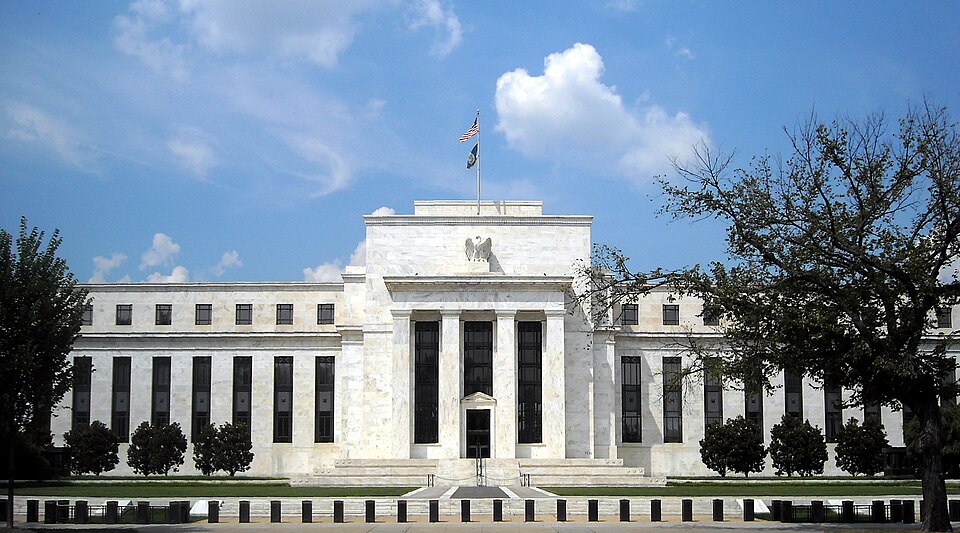
94 of 100 Expect a Hold, 71% Price a December Hike (Fed Decision Preview, 28 October 2026): What to Expect and What It Means for the Dollar
The Federal Reserve announces its decision at 2:00 p.m. Eastern on Wednesday 28 October, and a hold at 3.75%–4.00% is as close to certain as a central bank decision gets: 94 of 100 economists in a Reuters poll expect it. The meeting still matters, because all 100 of those economists expect a hike in December while futures price only about 71%. This week's statement, vote and press conference decide which of those two numbers is right — and that gap, not the rate itself, is what moves the dollar.
- When. Statement Wednesday 28 October, 2:00 p.m. ET (18:00 UTC, 02:00 HKT Thursday). Chair Warsh's press conference at 2:30 p.m. ET. No new projections at this meeting.
- The consensus. 94 of 100 economists expect a hold at 3.75%–4.00% (Reuters poll, 16–20 October). All 100 expect a December hike.
- The market. CME FedWatch priced about 71% for a December hike as of 23 October. The distance from 71% to 100% is what this meeting can move.
- The inflation split. September headline CPI ran 3.7% a year; core ran 2.6%. The gap is energy — Brent settled at $116.72 on 23 October — and the Fed's problem is whether it is leaking into expectations.
- Watch the vote, not the rate. July was a 9–3 hold with three hawkish dissents; September was a 12–0 hike. A dissent for a hike this week would be the clearest hawkish signal on offer.
- See how the interest-rate factor is scoring the dollar against seven other currencies on the live meter.
When the decision lands and what is published
The Committee meets on 27–28 October, the seventh of eight scheduled meetings on the Federal Reserve's 2026 calendar. The statement is released at 2:00 p.m. Eastern on Wednesday and Chair Kevin Warsh takes questions from 2:30 p.m.
The time conversion is unusual this week. The UK moved its clocks back on Sunday 25 October, but the US does not change until 1 November, so for one week London and New York are only four hours apart. 2:00 p.m. Eastern is 18:00 UTC, 18:00 in London, and 02:00 on Thursday in Hong Kong, Singapore and Perth.
October is not a projection meeting. The asterisked meetings on the Fed's calendar — March, June, September and December — carry a Summary of Economic Projections; this one does not. That means there is no dot plot to reprice. Everything the market learns has to come through the statement, the roll-call vote and a press conference. The next meeting, with fresh projections, is 8–9 December.
What the consensus expects
| Fed, 28 October 2026 | Expectation | Source |
|---|---|---|
| Decision | Hold at 3.75%–4.00% | 94 of 100 economists, Reuters poll 16–20 Oct |
| Hike at this meeting | 6 of 100 economists | Reuters poll |
| December hike | All 100 economists | Reuters poll |
| December hike, market-implied | ~71% | CME FedWatch via CNBC, 23 Oct |
| Peak rate | 4.00%–4.25% for nearly 60%; 38 of 92 see two or more hikes | Reuters poll |
| PCE back at 2% | Not before 2028 | Reuters poll medians |
The poll shift is the story. In September, fewer than half the economists Reuters surveyed expected a December hike; in October, all of them do. The share expecting at least two more increases rose from about a fifth to 38 of 92.
The economists are not unanimous on whether skipping October is right. Mizuho's senior US economist Alex Pelle told Reuters that "Them not going in October is the wrong call from a policy point of view," and that the risk is "greater they end up going 50 than they don't go at all." Morgan Stanley's chief US economist Michael Gapen said the risks "are in the direction of a Fed that ultimately needs to hike rates more than we expect." Those are forecasts about the path, not about Wednesday — they make the case that the statement will be read for urgency.
Why the Fed is holding while inflation runs at 3.7%
The September Consumer Price Index explains the hold better than any speech. On index levels published by the Bureau of Labor Statistics, all-items CPI rose 3.7% from a year earlier. Core CPI, which excludes food and energy, rose 2.6%. More than a percentage point of the headline is energy.
That gap is the oldest dilemma in central banking. An oil shock raises prices once; a rate hike cannot produce more oil. The conventional answer is to look through the first-round effect and act only if it spreads into wages, services prices and — most of all — expectations. The Fed already acted once, raising rates in September for the first time since July 2023, which we previewed in our September CPI note. The October hold is the Committee waiting to see whether that was enough.
The evidence on spillover is mixed, and that is why December is not fully priced:
- Energy is still rising. West Texas Intermediate for December delivery settled at $103.27 on 23 October and Brent at $116.72, Brent's highest settlement since 29 April, CNBC reported, after fresh attacks on Saudi oil installations.
- Expectations are drifting. The University of Michigan's October survey put one-year inflation expectations at 4.7% and the five-year at 3.5%, both 0.1 point higher than September. The five-year number is the one a central bank worries about, because it measures whether households think the shock is temporary.
- Activity is not slowing. S&P Global's manufacturing PMI came in at 56 against a 55.3 estimate, its highest reading in 53 months. Reuters' poll has the economy growing 3.2% annualised in the third quarter.
The three things that can move prices on Wednesday
With the rate itself priced, the information comes from three places, in roughly this order of importance:
The vote. It is the cleanest signal because it is binary. The July meeting held 9–3 with three members voting to raise rates; September raised 12–0 and the dissents disappeared, because the hawks got their move. A hold with one or more dissents for an immediate hike would tell the market that December is a floor rather than a forecast. A unanimous hold would read as a Committee comfortable waiting.
The statement. Small edits carry the information. Watch the description of inflation and of energy prices, and whether the text still points to further increases. Reuters reports that officials have recently signalled a preference for "a slower, more deliberate path" — if that preference shows up in the wording, December pricing can slip.
The press conference. Warsh has made clear he does not want to pre-announce moves, and Reuters notes he has kept quiet on the outlook. Chris Rupkey, chief economist at Fwdbonds, told CNBC he expects the briefing to "likely leave bond investors in the dark." Markets wanting a December confirmation will get a refusal either way. What matters is the reason he gives: "the data will decide" leaves 71% roughly where it is; an emphasis on inflation expectations pushes it up; an emphasis on financial conditions or credit stress pulls it down.
Scenarios and what each would mean
| Scenario | What it looks like | Two-year yield / USD | US500 / NAS100 |
|---|---|---|---|
| Priced hold (base case) | Unanimous or near-unanimous hold, tightening bias kept, no guidance | Little changed; December stays near 70% | Rate channel neutral; earnings and AI financing stay the driver |
| Hawkish hold | Dissent(s) for a hike, firmer inflation language, expectations flagged | Two-year higher; December pricing toward certain; dollar firmer, especially against low-yielders such as JPY | Higher discount rate pressures long-duration growth names |
| Dovish hold | Language on financial conditions or credit, December looks optional | Two-year lower; dollar softer as the rate gap narrows | Relief through lower yields — unless it is read as concern about growth |
| Surprise hike | 25bp to 4.00%–4.25% | Largest front-end move; dollar's rate advantage widens at once | The sharpest repricing, because almost none of it is priced |
These are mechanisms, not forecasts. Most Fed days sit in the first row. The rows below it matter because the positioning is lopsided: with every economist already expecting December, a dovish surprise has more room to move prices than a hawkish one.
What it means for the dollar — and beyond it
For currencies, the decision reaches prices through the interest-rate factor. The dollar's yield advantage is the gap between the expected US policy path and everyone else's. A Fed that confirms December widens that gap; a Fed that hedges narrows it. The effect is largest against currencies whose central banks are moving slowly — above all the yen, where the Bank of Japan's policy rate is still only around 1.25% after its September hike. It is smaller against the euro, where the European Central Bank has already raised its deposit rate twice this year.
Equities have a second channel this autumn. The 10-year yield fell back below 5% last week for the first time in a month, CNBC reported, because investors were worried about the debt technology companies are taking on to fund AI build-outs. Stress has shown up in the credit of the most leveraged names. We covered the equity side in our note on the Nasdaq's 2.6% fall on 22 October. A hawkish Fed raises the cost of that financing directly. That is why this rate decision reaches the NAS100 through credit as well as through valuation multiples.
The meter's dollar page, yen page and euro page show how each currency is scoring on rates, growth, positioning, risk sentiment and commodities going into the decision.
What to watch after Wednesday
- The minutes. They arrive three weeks after the meeting, as with the September minutes. Their quantifiers — "most", "many", "some" — will show how broad December support really is.
- October and November data. A further round of jobs and inflation reports lands before 9 December. A Committee that declined to give guidance has said the data decides, so these releases carry more weight than usual.
- Oil. With Brent above $115, energy is the input that can turn a supply shock into an expectations problem — the condition under which "one more hike" becomes "two".
- December projections. The September median put the end-2026 rate at 4.1%, one more quarter point. The December dot plot will show whether that has changed.
Bottom line
A hold on Wednesday is not news; the market will treat it as the default. The decision that matters is whether this meeting closes the gap between economists who all expect December and futures that price about 71%. Watch the vote first, the inflation wording second and Warsh's reason for not giving guidance third. More on how we build these notes is on our about page.
Educational macro context only — not investment advice.
Frequently asked
When is the Fed's October 2026 rate decision?
Will the Fed raise rates on 28 October 2026?
Is the Fed expected to hike in December 2026?
Why does the Fed's October statement matter if rates do not change?
How does the Fed decision affect the dollar and stocks?
Related reading
Currencies29,000 Jobs and a 10-Year Up 27bp Since the Hike (Fed Minutes Preview, 7 October 2026): What to Expect and What It Means for the Dollar
The minutes of the Fed's September hike drop 7 October at 2pm ET. Since then payrolls rose just 29,000 and the…
5 Oct · 10 min2.1% Expected, First Time Above Target Since December (Japan CPI Preview, 23 October 2026): What to Expect From September Inflation and What It Means for the Yen
Japan's September CPI lands 23 October at 8:30 JST. A Reuters poll sees core at 2.1%, up from 1.7% and back ab…
22 Oct · 10 min3.7% Headline, 0.2% Core Expected (US CPI Preview, 14 October 2026): What to Expect From September Inflation and What It Means for the Dollar
September CPI lands 14 October at 8:30 ET. Forecasts see headline at 3.6–3.7% on a 7% gasoline jump and core n…
13 Oct · 9 min