
81 Cents for a Ballistic Missile (21 September 2026): Riyadh Was Struck at Dawn, Yanbu Was on the Target List — and Brent Opened Up 0.78%
Missiles hit Riyadh and targeted Aramco at Yanbu on 19 September. Brent opened 81 cents higher at $104.68 — 0.78%. In 2019 the same kingdom moved 14.6%.
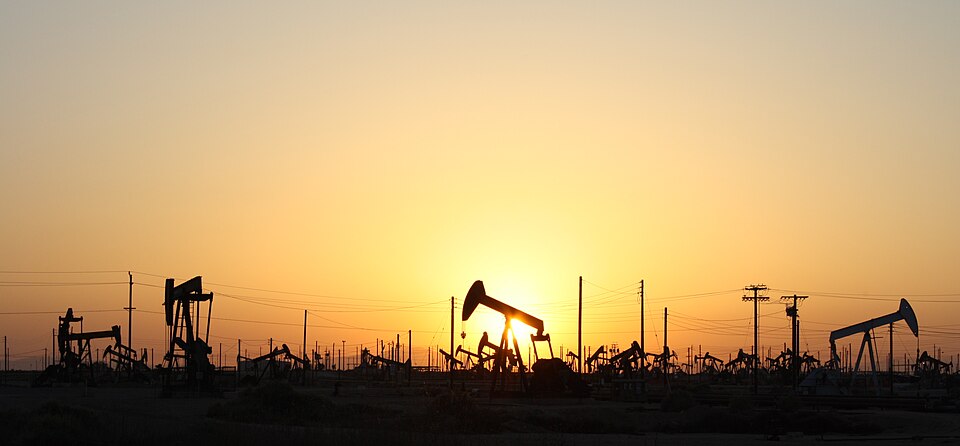
81 Cents for a Ballistic Missile (21 September 2026): Riyadh Was Struck at Dawn, Yanbu Was on the Target List — and Brent Opened Up 0.78%
Houthi forces fired ballistic and cruise missiles and drones at Saudi Arabia before dawn on Saturday 19 September, in two declared operations: one against sites in Riyadh, one against Saudi Aramco facilities at the Red Sea port of Yanbu. The Saudi-led coalition said the missile aimed at the capital was intercepted and destroyed, and that the rest were thwarted. When futures reopened, Brent climbed 81 cents — 0.78% — to $104.68. In September 2019, an attack on the same kingdom over the same kind of weekend moved Brent 14.6% in a single day. The gap between those two numbers is not a measure of how alarming an attack was. It is a measure of how many barrels stopped moving.
- Two declared operations, nothing delivered. Houthi spokesman Yahya Saree claimed strikes on Riyadh and on Aramco facilities at Yanbu. The coalition said the Riyadh missile was intercepted and the other attempts thwarted, with no casualties or damage reported.
- The market paid 81 cents. Brent $104.68, up 0.78%; WTI $101.06, up 0.76%, by 2202 GMT as Monday's session opened, per Reuters.
- The control experiment already exists. Abqaiq, September 2019: 5.7 million b/d disrupted, about 5% of world supply, Brent +14.6% to $69.02 on the first full session. Same kingdom, same weekend-attack structure, nineteen times the move.
- What burned was the wrong commodity. The reported Riyadh fire was at a fuel depot near the airport — refined product for domestic use, not crude staged for export.
- Yanbu was already dark. No crude has departed the terminal since 11 September, because the pipeline feeding it was shut after a separate drone attack. An attack cannot stop exports that have already stopped.
- The week before moved more, on paperwork. Brent went $108.75 → $105.83 → $103.87 across three sessions on repair-timeline reporting, without a single barrel changing hands differently.
- See how the commodity, risk and interest-rate factors are scoring the eight majors right now on the live meter.
What actually happened: two operations, one night, one interception
The attack came before dawn on Saturday 19 September, after an alert issued overnight on Friday. Houthi military spokesman Yahya Saree said on Telegram that the Yemeni Armed Forces had carried out two successful military operations using a large number of ballistic and cruise missiles and drones, the first targeting sensitive sites in Riyadh and the second targeting Aramco facilities in Yanbu.
The Saudi-led coalition's account differs on outcome rather than on intent. Its spokesman, Major-General Turki al-Maliki, said the ballistic missile aimed at Riyadh was intercepted and destroyed, and that the Houthis also attempted to target civilians and civilian infrastructure in Bisha, Taif, Farasan and Yanbu, per Al Jazeera. Saudi authorities reported no casualties or damage. It was the first air-raid alert in the capital since the July escalation.
Residents nonetheless heard at least one explosion and saw black smoke near King Khalid International Airport. France 24 reported that a fuel tank at a depot near the airport caught fire and was put out by firefighters, and that the airport hit the maximum reading on FlightRadar24's disruption index — long delays and several cancelled flights through Saturday.
Those two accounts sit in tension, and this note is not going to resolve them. The useful point is that they do not need resolving in order to read the price. Whether the smoke came from an interception overhead or from a tank on the ground, the thing that burned was a fuel depot serving the capital and its airport. That is refined product at the consumption end of the chain. Crude sold to a refinery in Rotterdam or Ningbo sits at the other end, and none of it passed through a tank near King Khalid International on Saturday morning.
The control experiment: September 2019, same kingdom, nineteen times the move
There is a reason this episode reads so cleanly. It has an almost perfect historical control, and the control ran the same experimental setup.
On Saturday 14 September 2019, an attack using missiles and drones struck the Saudi Aramco Abqaiq processing facility and the Khurais oil field. According to the US Energy Information Administration, it temporarily disrupted 5.7 million barrels a day of production — more than half of Saudi Arabia's output and about 5% of global supply. On Monday 16 September, the first full trading day after it, Brent rose 14.6% to settle at $69.02, the largest single-day increase in a decade.
Hold the two weekends side by side. Both are attacks on Saudi Arabia. Both land on a Saturday, so the market gets the same forced pause and the same Monday open as its first chance to price them. Both are launched with missiles and drones. The published price outcomes diverge by a factor of roughly nineteen.
The single variable that differs is whether the supply chain was interrupted. That is the whole mechanism, and it is worth stating in its least dramatic form: a crude futures price is a claim on barrels that can be delivered, so it responds to barrels that cannot be. Intent, capability, range and escalation risk all enter the price too — but they enter it as a probability weight on future loss, and a probability weight is worth cents where a realised loss is worth dollars.
The ten days before were louder than the attack
The comparison that makes the point hardest is not 2019. It is the same benchmark, the same story, earlier this month.
| Session | What happened | Brent settle | Move |
|---|---|---|---|
| Tue 15 Sep | Cargo cancellations reported; East-West pipeline shut since 10 Sep | $108.75 | +2.9% |
| Wed 16 Sep | Reporting that Aramco is bypassing the damaged section | $105.83 | −2.7% |
| Fri 18 Sep | Third consecutive down session; week finished roughly flat | $103.87 | −0.9% |
| Sat 19 Sep | Missiles at Riyadh; Aramco at Yanbu targeted; all intercepted | market closed | — |
| Mon 21 Sep, 2202 GMT | First trade after the attack | $104.68 | +0.78% |
Sources: CNBC reporting on the 15, 16 and 18 September settles; Reuters for the Monday open.
Read down that column. The largest single move in the sequence — a 2.9% gain to a Brent settle of $108.75 on 15 September, with WTI up 4.4% to $105.83, its highest close since 19 May — came from Saudi Arabia telling European customers that specific cargoes were cancelled. The second largest, a 2.7% fall the next day, came from reporting that Aramco was routing around a damaged pipeline segment. Neither event involved a missile. Neither added or removed a barrel from world supply. Both changed the number of weeks during which specific barrels could not reach specific buyers, and that duration is what the curve prices.
By Friday the market had settled into the view that the disruption was smaller than feared. CNBC reported that crude fell for a third straight session as the market anticipated the pipeline closure would not hit supplies as hard as originally feared, with WTI down 1.6% to $100.30 and Brent down 0.9% to $103.87. Natasha Kaneva, head of global commodities strategy at JPMorgan, put it plainly: "Middle East oil flows remain surprisingly strong despite the disruption to Saudi Arabia's East-West pipeline."
Saturday's attack did not overturn that. It nudged it by 81 cents.
Yanbu was the target that could have mattered — and it was already dark
Of everything on Saturday's list, one name carried genuine supply consequence. Yanbu is the Red Sea terminus of the East-West pipeline, the line Al Jazeera reported can carry about 7 million barrels a day from the eastern producing fields to the far side of the Arabian Peninsula. That route exists precisely so Saudi crude does not have to transit the Strait of Hormuz, and through most of this year it has been the kingdom's main way of getting oil to market while the strait has been unusable for routine commercial traffic.
Which is why the Houthi claim of a strike on Aramco facilities at Yanbu was the part of Saturday's announcement worth checking first, and why the coalition's statement that it was thwarted is the part that mattered most to Monday's open.
There is a second reason the target was poorly chosen, and it is almost paradoxical. Yanbu has loaded no crude since 11 September. The pipeline feeding it was shut after a separate drone attack on 10 September, and the terminal has been drawing down inventory rather than receiving fresh throughput ever since. A successful strike on a terminal that is already not loading destroys physical infrastructure without removing an export barrel that was going to leave this week — the marginal supply effect on the day is close to nothing, whatever the repair bill.
What this does not tell you about the risk premium
None of the above says the risk premium is wrong, or that the market is complacent. It says the premium is already there.
Brent entered this week more than 20% above where September began, and it has been trading above $100 for weeks against a backdrop in which the Strait of Hormuz is contested, a US-Iran stalemate persists, and Saudi Arabia's main Hormuz-bypass route is shut. A market that has already repriced for a war does not need to reprice again for each individual attack inside it. That is the honest reading of 0.78%: not that the attack was dismissed, but that the scenario it belongs to has been in the price for months.
The asymmetry runs the other way too. The same logic that keeps an intercepted missile cheap makes a single successful interdiction expensive, because a market priced for a disruption of a given size has to add to that estimate rather than merely confirm it. This is the standard shape of a chokepoint premium, and the mechanics of how one gets built and unwound are set out in the Hormuz note.
Where the currency side actually picks this up
The temptation on a story like this is to run it through the eight majors because that is what a currency site does. At this size it does not belong there, and saying so is more useful than forcing it.
The transmission from Middle East conflict to currencies runs through the crude price itself: a sustained move in oil shifts the terms of trade between energy exporters and energy importers, which is why commodities is one of the five factors scored for each of the eight majors — the method is described on the about page. An 81-cent move in Brent sits inside the daily noise of that channel. The Canadian dollar does not notice it; the terms-of-trade case for CAD responds to the level and the trend rather than to a single session, and the longer treatment is in the note on oil and the Canadian dollar. The yen side, where near-total energy import dependence makes a crude move a direct national cost, is likewise a story about a $100-plus Brent level that has persisted for months rather than about Saturday.
What Saturday did change, at the margin, is the tail. An intercepted ballistic missile over a G20 capital is information about capability and reach even when it is information about nothing else. It belongs in the risk factor as a small upward revision to the probability of a future supply event — which is roughly the weight 81 cents implies.
What would change the picture
Three things are checkable from here, and none of them is a forecast.
The first is Yanbu departures. Tanker-tracking services publish the count daily and it has been zero since 11 September. The first non-zero print means the bypass is moving crude, regardless of what has been announced — and it also means the terminal stops being immune to the kind of attack that was attempted on Saturday.
The second is the physical benchmark. Dated Brent was assessed around $122 a barrel on 15 September against futures settles between $103.87 and $108.75 across the sessions that followed. A physical assessment trading well above the screen is the market saying the shortage is of specific cargoes in specific places rather than of oil in general. If that spread narrows while futures hold, the logistics problem is easing. If it widens while futures fall, the screen is the leg that is wrong.
The third is whether an attack ever reaches the export chain rather than the domestic one. The distinction between a fuel depot near an airport and a crude terminal on the Red Sea is not a technicality — it is the entire difference between 0.78% and 14.6%, and it is usually knowable from the first reports if you read past the phrase "oil facility".
What none of this supports is a view on where the price goes next. The narrower and more useful summary: a market already carrying a large war premium was handed an attack on a capital city and an attempted strike on an export terminal, checked whether either had removed a barrel it was counting on, found that neither had, and paid 81 cents for the information.
Educational macro context only — not investment advice.
Frequently asked
Why did oil only rise 0.78% after the Houthi attack on Riyadh?
What did the Houthis actually target on 19 September 2026?
Why did the 2019 Abqaiq attack move oil 14.6% and this one did not?
Was Saudi oil export capacity damaged in the Riyadh attack?
What would make an attack like this move the oil price?
Does a Middle East attack like this show up in currency markets?
Related reading
 History
Black Wednesday 1992: How Soros Broke the Bank of England
On 16 September 1992, George Soros pocketed over £1 billion shorting the pound as Britain was forced out of th…
31 Jul · 8 minEurozone Inflation Rises to 2.9% (July 2026): Core Hit 2.5% While Monthly Prices Went Nowhere — Why That Put a September ECB Hike at 85%
Euro-area flash CPI rose to 2.9% in July and core to 2.5%, yet monthly core was flat. Here is the mechanism — …
25 Jul · 9 min9.7% Free Float on the Voting Share (21 September 2026): Volkswagen Left the Euro Stoxx 50 This Morning — and the Stock That Got Deleted Carries No Vote
VW left the EURO STOXX 50 at today's open, replaced by Nokia. The deleted security is the non-voting preferenc…
21 Sep · 12 min