
63% of Gulf Oil Shut In (Hurricane Isaias, October 2026): Why the Refineries Matter More Than the Rigs — and What It Means for Oil and Diesel
Isaias has shut in 1.28m b/d, 62.89% of Gulf oil output. Rigs restart fast if undamaged; a refinery hit would move diesel, not crude. The channels, mapped.
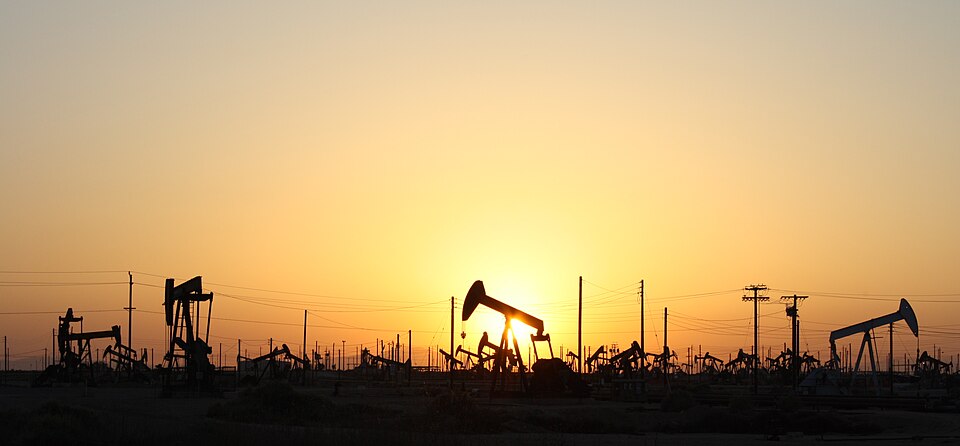
63% of Gulf Oil Shut In (Hurricane Isaias, October 2026): Why the Refineries Matter More Than the Rigs — and What It Means for Oil and Diesel
Hurricane Isaias has taken 1,282,879 barrels a day of oil production offline in the Gulf, 62.89% of the region's output, according to the Marine Minerals Administration's Thursday report. Landfall is expected on the northern Gulf Coast between Mississippi and the Florida Panhandle on Friday night or early Saturday. For oil and fuel prices, the shut-in number matters less than two questions it does not answer: whether any offshore platform is damaged, and whether any refinery onshore loses output.
- As of 11 a.m. CDT Thursday 8 October, 1.28 million barrels a day of oil (62.89%) and 1,127 million cubic feet a day of gas (57.35%) were shut in, with 121 of 371 manned platforms evacuated.
- At 1 a.m. CDT Friday, Isaias had 105 mph winds about 230 miles south of the mouth of the Mississippi; the hurricane warning runs from Ocean Springs, Mississippi, to the Bay/Gulf County line, Florida.
- Precautionary shut-ins usually reverse within days if platforms are undamaged. Damage, as after Hurricane Ida in 2021, is what turns a pause into a supply loss.
- A refinery outage cuts demand for crude while tightening fuel supply, so it pushes crude and diesel in opposite directions. With diesel at $6.28 a gallon, fuel is where the market is most exposed.
- The commodities and rates factors carry the currency channel — see how they sit in the live meter.
What has happened so far
Isaias formed as a tropical storm off eastern Mexico on Wednesday 7 October and became a hurricane on Thursday. The Associated Press reported it was on track to tie or break the 1905 record for the latest first hurricane of an Atlantic season. A strong El Niño had kept the Atlantic unusually quiet until now. That quiet matters for markets: through the summer, the hurricane risk premium that usually sits in Gulf Coast fuel prices between August and October had very little reason to build.
The National Hurricane Center's 1 a.m. CDT advisory on Friday 9 October put the centre about 230 miles south of the mouth of the Mississippi River, moving north-northeast at 14 mph, with maximum sustained winds near 105 mph and a central pressure of 972 mb. The NHC said Isaias "could briefly become a major hurricane" later on Friday before some weakening, with landfall "tonight or early Saturday" inside the warning area. Its advisories are the primary record for the storm.
Offshore, operators shut in production as the forecast firmed. The Marine Minerals Administration, which absorbed the old offshore safety regulator's reporting this year, publishes the count daily:
| Report (11 a.m. CDT) | Oil shut in (b/d) | Share of Gulf oil | Gas shut in (MMcf/d) | Share of Gulf gas | Platforms evacuated |
|---|---|---|---|---|---|
| Wednesday 7 October | ~511,600 | 25.08% | ~350 | 16.37% | 8 of 371 |
| Thursday 8 October | 1,282,879 | 62.89% | 1,127 | 57.35% | 121 of 371 |
Shell said on Wednesday it was evacuating all personnel and shutting in production at its Mars, Olympus, Ursa, Vito and Appomattox facilities. Chevron began shutdown procedures at four of its operated Gulf facilities while its other five kept producing.
How big is 1.28 million barrels a day?
The Gulf produces almost 15% of US crude, according to the AP. The Thursday figures imply total Gulf output of a little over 2 million barrels a day. The EIA's September outlook put 2026 US crude production at a record 13.8 million barrels a day, so the shut-in is roughly 9% of national output. The Maritime Executive put it at more than 1% of global production.
That is a large number for a single event. It is also the wrong number to watch on its own. The MMA's own release explains why: shutting in is a safety procedure, closing valves below the seabed so nothing leaks if a platform is hit. "Production from undamaged facilities will be brought back online immediately" once inspections are done. A shut-in ordered as a precaution is a pause in supply, not a loss of it.
Why the refineries matter more than the rigs
Offshore production and onshore refining sit on opposite sides of the oil market. When a hurricane hits them, they push prices in different directions.
A production shut-in removes supply of crude. Gulf offshore output is mostly medium, higher-sulphur crude such as Mars. That is the type of barrel Gulf Coast refineries were designed to run, and it is also the type the Middle East exports. With Persian Gulf flows already disrupted, a sour-crude shortfall in the US Gulf removes a substitute that refiners would otherwise lean on.
A refinery outage removes demand for crude and supply of fuel. A refinery that shuts stops buying crude, so the barrels that would have gone into it go looking for another buyer. At the same moment, its gasoline, diesel and jet fuel disappear from the market. The result is a wider crack spread: fuel prices up relative to crude, and sometimes crude down outright.
That is why the geography of the track matters more than the headline percentage. The hurricane warning area from Ocean Springs to the Florida Panhandle contains Chevron's Pascagoula refinery on the Mississippi coast, one of the larger plants on the Gulf Coast. The heavier concentrations of refining capacity, around Baton Rouge and Lake Charles in Louisiana and along the Texas coast, are to the west, and Texas is outside the NHC's warnings. Earlier in the week the NHC described its confidence in the track as "below average", which is why refiners further west have been watching rather than relaxing.
Why the timing is worse than usual
In most years a Gulf hurricane lands on a market with buffers. In October 2026 the buffers are thin, and they are thinnest in refined products.
- Crude is already elevated. Brent closed at $104.28 on Thursday 8 October, up 4% on the day after fresh attacks on Persian Gulf shipping, and US crude closed at $91.49, NBC News reported. Traffic through the Strait of Hormuz averaged fewer than 23 ships a day from 28 September, against hundreds a day before the war.
- Diesel is the pressure point. The US average diesel price was $6.28 a gallon on Thursday, almost 70% above its late-February level, and regular gasoline was $4.36, per NBC. Our note on the G7 reserve release explains why the stockpile draw announced on 2 October was aimed at diesel first.
- Shipping is expensive. Moving US crude to Asia on a very large crude carrier costs about $77 million per voyage, against $9.2 million on average last year, according to Baltic Exchange data cited by Bloomberg via NBC. That makes it harder and slower for other regions to fill a product gap with imports.
In that setting, the market has less room to absorb a lost week of refining than it would in a normal autumn. Our earlier look at the record diesel crack spread sets out how the refining margin became the market's stress gauge this year.
Three outcomes and what each would change
| Outcome | What happens | Crude | Diesel and gasoline | Natural gas |
|---|---|---|---|---|
| Glancing blow, no damage | Platforms inspected and restarted within days; refineries run through | Shut-in reverses; little lasting effect | Little lasting effect | Gulf output restored; coastal demand dips while power is out |
| Offshore damage | Some platforms or pipelines need repair; part of the 1.28m b/d stays offline for weeks | Tighter, particularly sour grades | Indirect, via refiners paying more for feedstock | Gulf gas slower to return |
| Refinery outage | Coastal plant loses power or floods; restart takes days to weeks | Crude demand falls; can soften | Cracks widen; fuel prices most exposed | Lower industrial demand near the coast |
These outcomes are not mutually exclusive, and the third is the one that would matter most for prices this year. The first is how most precautionary shut-ins end. None of them is a forecast; the storm's track and intensity at landfall decide which applies.
Natural gas is the smaller story. The Gulf's offshore gas output of roughly 2 billion cubic feet a day is a small share of US production, which comes mostly from onshore shale basins. The larger gas channel in a Gulf storm is usually demand: power outages and any disruption to the LNG export terminals in Louisiana and Texas. Those terminals sit west of the current warnings.
The channel to the instruments you trade
Oil and fuel. The storm affects the near end of the futures curve, not the long-run balance. A pause measured in days gets bridged from inventories. Damage measured in weeks adds to a market already short of Middle East barrels. The figures that will settle the question are the MMA's daily shut-in update at 1 p.m. CDT and the first refinery status statements after landfall.
Rates and the dollar. Pump prices feed directly into headline CPI. With the US 10-year yield near 5.35% this week and markets already sensitive to energy-driven inflation, a refinery-led fuel spike would add to the pressure on the US dollar's rate story. A storm that passes cleanly would leave it unchanged.
Currencies. For the Canadian dollar, higher crude prices improve the terms of trade at the margin. A temporary US Gulf outage is a small input next to the Hormuz disruption, so any effect would be second-order.
Indices. In the US500, the effect is about which sectors win and lose, not about the index level. Refiners outside the storm's path benefit from wider cracks. Airlines, trucking and logistics pay more for jet fuel and diesel. Insurers carry the damage bill.
What to watch next
- The NHC's landfall advisories on Friday night and Saturday: exact landfall point and intensity, and any westward shift toward Louisiana's refining corridor.
- The MMA's daily shut-in report at 1 p.m. CDT. The percentage starts falling as crews return. If it stays high days after landfall, platforms or pipelines have been damaged.
- Refinery statements from plants in and near the warning area, Pascagoula first. Power and flooding are the usual causes of an outage, rather than wind.
- The EIA's weekly petroleum report on eia.gov, which will show the storm in crude production, refinery utilisation and product inventories.
For how the site approaches market events, see about pip theory.
Educational macro context only — not investment advice.
Frequently asked
How much oil production has Hurricane Isaias shut in?
Will Hurricane Isaias raise oil prices?
Which refineries are in the path of Hurricane Isaias?
Why does a hurricane matter more for diesel than for crude this year?
Does Hurricane Isaias affect currencies?
Related reading
Markets$6.199 a Gallon and 100 Million Barrels (G7 Reserve Release, October 2026): Why the Stockpile Draw Targets Diesel — and What It Can and Can't Do to Oil Prices
The G7 will release 100m barrels over four months, diesel first. US diesel is already down to $6.199 from $6.5…
7 Oct · 10 min Markets
188,000 Barrels Added, 5.5 Million Shut In: The OPEC+ Meeting of 6 September 2026 — and Why the Quota Stopped Setting the Oil Price
OPEC+ meets at 11:00 GMT on 6 September to set October quotas. With 5.5 mb/d shut in and the 2027 capacity aud…
3 Sep · 13 min Markets
$200 Diesel and 507 Million Barrels Drawn (11 September 2026): The IEA Says the Squeeze Moved From the Wellhead to the Refinery
IEA, 11 September: 507mb of inventory drawn since February, diesel above $200/bbl, Gulf product exports down 6…
31 Aug · 22 min