
Brent −8.7% to $94.62, Loonie Up Anyway (4 November 2026): Why the Midterm Result Hit Oil — and Why the Canadian Dollar Rose as Its Biggest Export Fell
Brent settled 8.7% lower at $94.62 on 4 November as markets priced a shorter Iran war after the midterms. The channel to crude, and why CAD still rose.
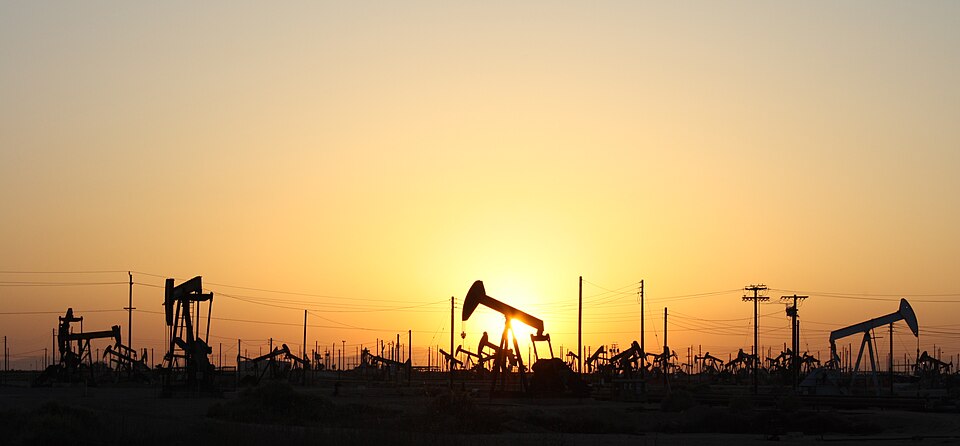
Brent −8.7% to $94.62, Loonie Up Anyway (4 November 2026): Why the Midterm Result Hit Oil — and Why the Canadian Dollar Rose as Its Biggest Export Fell
Brent crude settled 8.7% lower at $94.62 a barrel on Wednesday 4 November 2026, and WTI fell 8.3% to $88.12, after Democrats won both chambers of Congress. No barrel of supply changed hands differently that day. What changed was the market's estimate of how long the Iran war, and the risk premium attached to it, will last. The Canadian dollar rose anyway, because the same result weakened the US dollar by more than cheaper oil weakened the loonie.
- The move. Brent −8.7% to $94.62, lowest settlement since 31 August; WTI −8.3% to $88.12, its biggest drop since May (Bloomberg).
- The channel is duration, not supply. A war premium prices the chance of disruption times how long the risk lasts. The result shortened the expected duration.
- The physical picture was already loosening. Bloomberg reported Hormuz flows near pre-war levels, and JPMorgan put October's global surplus at 1.4 million barrels a day.
- CAD rose against falling oil. USD/CAD hit 1.3930, the loonie's strongest since 16 September, because broad dollar weakness outweighed the terms-of-trade hit.
- Nothing is law yet. The new Congress sits on 3 January 2027. Until then, the price is trading probabilities.
- Commodities and risk sentiment are two of the five factors behind each currency's score. See where CAD and USD rank on the live meter →
What happened on 4 November
Democrats won majorities in both the House of Representatives and the Senate in the 3 November midterm elections, CNBC reported. Our pre-vote note set out how a change of control reaches stocks, yields and the dollar. The oil market added a channel that note gave less weight to: the war.
According to Bloomberg's settlement report, Brent for January delivery fell 8.7% to $94.62, after touching $93.22 intraday, and settled at its lowest since 31 August. WTI for December fell 8.3% to $88.12. Bloomberg said prices took a fresh lunge lower after Vice President JD Vance attributed Republican losses to the overseas conflict, and that Senate Minority Leader Chuck Schumer has pledged to end the war, with some Republicans expected to back the effort. President Trump told the Financial Times he had no immediate plans to ramp up fighting in the Middle East.
The rest of the tape moved the same way. The Dow rose 1,569.40 points, or 3.03%, to 53,356.12, its best day since April 2025; the S&P 500 gained 1.58% to 7,688.62. CNBC noted that stocks extended their gains as crude fell, and quoted Peter Boockvar of One Point BFG Wealth Partners: "There's just going to be even more pressure to end the war."
| Instrument | Move on 4 November 2026 | Source |
|---|---|---|
| Brent (Jan) | −8.7% to $94.62 | Bloomberg |
| WTI (Dec) | −8.3% to $88.12 | Bloomberg |
| Dow Jones | +3.03% to 53,356.12 | CNBC |
| S&P 500 | +1.58% to 7,688.62 | CNBC |
| ICE dollar index | −0.39% to 101.32 | CNBC |
| USD/CAD | 1.3965, low 1.3930 | Globe and Mail |
| Spot gold | +3.4%, then +1.9% to $4,134.83 on 5 Nov | CNBC |
Why an election moves a barrel it cannot touch
The puzzle in the headline is that a vote in the United States changed nothing about oil supply on 4 November. Tankers loaded the same cargoes. The new Congress does not convene until 3 January 2027, the date the Twentieth Amendment sets. So the move has to be about expectations.
A war premium is best thought of as two numbers multiplied together: the probability that flows are disrupted in a given period, and the number of periods the risk is expected to last. Futures contracts that settle months ahead carry the second number explicitly — the January Brent contract is a bet on conditions in late December, not today. An event that shortens the expected life of the conflict compresses the premium across the whole curve at once, even if the near-term probability of disruption is unchanged.
Rystad Energy's chief economist Claudio Galimberti framed the same mechanism in Bloomberg's report, saying the administration "faces a shorter political runway and greater institutional pressure to find a Hormuz deal." That is a statement about duration, not about supply.
Why the premium was ready to fall
An 8.7% drop on an expectations shift only happens when the price is carrying a lot of expectation. Three things in Bloomberg's report show that the physical market had already loosened before the vote:
- Flows. Bloomberg reported that shipments through the Strait of Hormuz were near pre-war levels. A premium built on the risk of a closure is exposed when the strait is functioning.
- Balance. JPMorgan said global oil markets had returned to a surplus, with an overhang of 1.4 million barrels a day in October, and that Middle East supply was outpacing demand for the first time since July.
- Positioning. Trend-following advisers cut Brent long positions to about 55% from 73%, according to Kpler's Bridgeton Research Group. Systematic funds that follow price momentum add selling into a falling market, which helps explain why a repricing became an 8% day rather than a 3% one.
Oil was still up roughly 50% on the year after the fall. Our note on the World Bank's October commodity outlook explains why physical Brent has been trading well above the futures price this autumn — the futures contract is where expectations live, so it is the series that moves most when expectations change.
The exception: diesel
Crude and refined products are not the same market. The EIA's weekly data showed US distillate stockpiles — diesel and heating oil — below 100 million barrels for the first time since 2003, according to Bloomberg. A shorter war lowers the price of crude, but it does not add refinery capacity or rebuild product inventories ahead of winter. The tightness in diesel is a refining and logistics problem as much as a war problem, so it can persist after the crude premium has gone. That matters for inflation: diesel feeds freight and food costs more directly than crude does.
Why the loonie rose when oil fell
The textbook link between oil and the Canadian dollar runs through the terms of trade: Canada exports crude, so a lower price means less income from abroad and a weaker currency. Our explainer on oil and the Canadian dollar covers that channel in detail. On 4 November it ran the other way.
The Globe and Mail reported the loonie up 0.3% at 1.3965 per US dollar, after touching 1.3930, its strongest since 16 September, even as US crude futures fell 8.5%. RBC Capital Markets' George Davis said USD/CAD "sold off in conjunction with broader-based USD weakness." The ICE dollar index fell 0.39% to 101.32, with the euro up at $1.1235 and sterling at $1.3476, per CNBC.
The arithmetic is simple. USD/CAD is a ratio of two currencies. The election result hit the denominator — the US dollar — across every pair, while cheaper oil hit only the numerator. When the broad move is larger than the commodity move, a commodity currency rises against the dollar while falling against currencies that import energy. Canada also had its own support that day: a September trade surplus of C$5.35 billion, the largest since May 2022, per the same report.
Two factors therefore pulled the Canadian dollar in opposite directions, and the US dollar side won. That is exactly the kind of tension that a single-factor reading of a currency misses.
What it does and does not change for the Fed
Lower oil reduces headline inflation with a lag of weeks, mostly through gasoline. The 10-year Treasury yield fell to about 4.87% by early Thursday, per CNBC, and gold rose to a two-week high as the dollar and yields eased. But traders still priced an 82% chance of a December rate hike on CME's FedWatch tool. One day's crude move does not change a rate path that rests on months of inflation data; it changes the risk around it. The October jobs report on Friday 6 November is the next test of that path.
What would change the picture
- Events in the Gulf. The premium fell on a political probability, not a ceasefire. A fresh disruption to Hormuz traffic would rebuild it, whatever Congress looks like.
- Statements from Washington before January. The current Congress sits until January. Documented policy actions before then would move the price more than projections about 2027.
- OPEC and Gulf supply. Bloomberg reported that Saudi Aramco will maximise production this quarter. More supply into a market JPMorgan already sees in surplus would reinforce the move.
- Diesel inventories. If distillate stocks keep falling into winter, product prices can stay high even with crude lower, keeping some inflation pressure in the system.
- The dollar. If broad dollar weakness fades, the oil channel for CAD becomes visible again, and the loonie's reaction to crude would return to its usual sign.
For how commodity prices and risk sentiment feed into the meter's currency scores, see how pip theory works.
Educational macro context only — not investment advice.
Frequently asked
Why did oil fall after the 2026 midterm elections?
How much did oil fall on 4 November 2026?
Why did the Canadian dollar rise when oil fell 8%?
When does the new Congress take office?
Did the oil drop change Fed expectations?
Related reading
 Markets
Nasdaq −2.6%, Dow Flat (22 October 2026): Why Beats From Meta and Tesla Set Off the Worst Tech Day Since June — and Why Chip Stocks Fell Hardest
The Nasdaq fell 2.6% on 22 October while the Dow rose 0.02%: AI capex worries after Meta and Tesla hit chips (…
23 Oct · 8 min Markets
19 of 19 Midterms Since 1950 Ended Higher a Year Later (US Midterm Elections Preview, 3 November 2026): What to Expect — and How Congress Reaches Stocks, Yields and the Dollar
US voters elect all 435 House seats and 35 Senate seats on 3 November. The S&P 500 was higher a year after all…
30 Oct · 8 min Markets
The 30-Year Real Yield Hits 3.06% (17 August 2026): Why Gold Fell in 2026 — and Why a 2007-High Long Bond Did Not Stop It
The 30-year real yield hit 3.06%, 2026's high, and the long bond reached a 2007 high — yet gold rose 0.45%. Wh…
31 Jul · 47 min